This season, the Des Moines Metro Opera presents Francis Poulenc’s opera “Dialogues des Carmelites”. Though the opera has been hailed as one of the few true operatic masterpieces of the 20th century, it is not staged as often as expected. The work has no memorable tunes, requires a large cast, and asks for a great deal of emotional commitment from its audience. In these hard financial times, it does not stick out as the most obvious choice for planning an operatic season. However, if the reviews of the first night performance are to be trusted, the company’s gamble appears to have been well worth it.
Category Archives: Arts
Tulsa’s Opera presents Bellini’s Norma
Tulsa Opera’s first production of Norma premiered on Saturday, April 30th, and continued for two more presentations on Friday May 6th and Sunday May 8th. Having attended the last two performances of the run, I can say that the company can pride itself in having assembled one of the most satisfying Norma casts that I have heard in the past fifteen years. Read the rest of this entry »
Bellini’s Norma: The sacred role goes to Oklahoma
Vincenzo Bellini’s Norma, the crown jewel of Bel Canto operas, premiered at the Teatro alla Scala in Milan on December 28, 1831 to an unenthusiastic reception. Following the path of other famous opening night fiascos (Rossini’s Il Barbiere di Sivilglia, Puccini’s Madama Butterfly and Verdi’s La Traviata come to mind,) the opera’s importance was recognized after its second performance, and the story of the Druid Priestess who falls in love with the enemy quickly established itself as part of the international repertoire. Last week, the opera premiered at Tulsa Opera for the first time in the company’s 63-year history, led by conductor Kostis Protopapas, with a cast headed by Brenda Harris as Norma. That the company has waited this long to premiere such an important work is indicative of the difficulty in conscientiously finding an appropriate exponent; one capable of bringing forth the classic qualities needed to make Norma an extraordinary musical event. Based on reviews following the opening night presentation on Saturday April 30th, it would seem that all was worth the wait.
The Atlanta Opera presents Mozart’s Cosi fan tutte
The Atlanta Opera’s presentation of Mozart’s Cosi fan tutte was heard for the first time this season last Saturday at the Cobb Energy Center. With a cast composed of primarily young artists, most making their Atlanta Opera debuts, the performance was well attended and enthusiastically received by the audience.
The score, performed in its traditional version, was cut in various sections of recitative, and ensembles such as the finale sections of both acts were significantly abbreviated. Conductor Kazem Adbullah propelled the proceedings by way of a rushed, snappy tempo, which remained irresponsive when called upon to create a theatrical or emotional effect. Furthermore, both in the orchestral texture and vocal line, a lack of musical rubato rooted many pages of the score earthbound. At worst, the music was found wanting in both poetry and elasticity. At best, it tried desperately to harmonize with the interpretation dictated by director Jose Maria Condemi. Moving the action from 18th century to 1940’s Naples allowed for the women to be beautifully costumed in flattering 40s fashions; and for the most part, Mr. Condemi achieved a general cohesion in setting up the situations to render to plot effective. That said, some stage cues were inexplicably ignored (such as the lack of portraits the women must describe to each other) or introduced when they made no sense (Despina’s panicked reaction to the military chorus in act two). What ultimately disturbed was the constant movement from ancillary characters while principals were assigned the musical spotlight. I found this consistently distracting, and at times it was necessary to close the eyes and allow the music to perform its task unobstructed. Alas, I will forgive everything if there is great singing onstage.
Lovers schooled: Mozart’s Cosi fan tutte.
Anticipating Atlanta Opera’s production of Cosi fan tutte.
In the program notes introducing his new production of Mozart’s Cosi fan tutte for the Dresden State Opera in 1983, producer Joachim Herz made this striking statement: “First things first: Cosi fan tutte does not take place today. It is a period piece from the past, and it reflects, in the most delightful way possible, an epidemic of the time: sentimentalism”. He goes on to argue that our ideals are conventions seldom rooted in human nature, and at times incompatible with it. As with all things relating to this work, the simplicity of this thought leads to complex repercussions, just as the deceptively simple events in the opera may lead the listener to question how our conventional moral code shapes our very idea of what “love” is supposed to be.
Victorian Terror: “The Secret Agent”
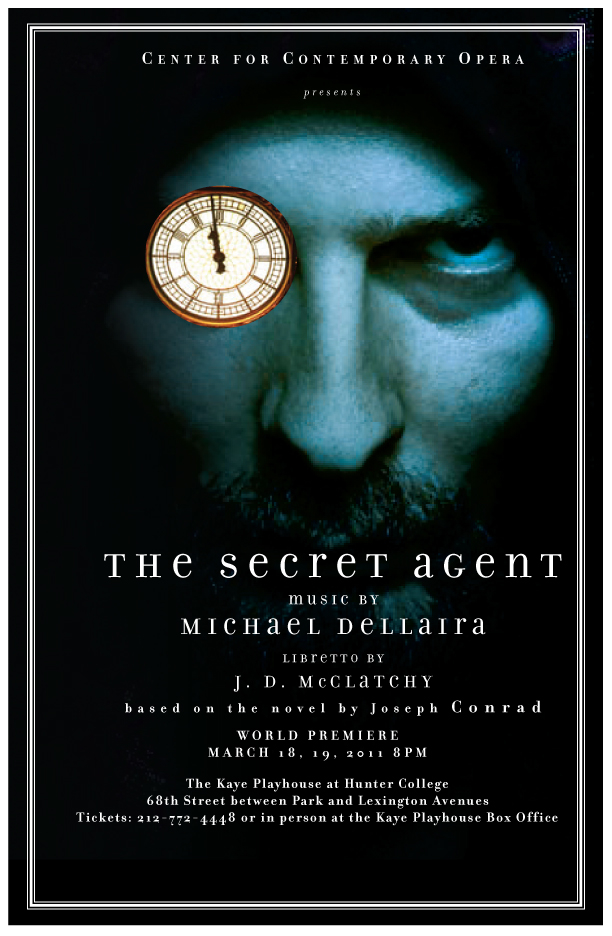
This month, the Center for Contemporary Opera will present “The Secret Agent”, a new opera based on Joseph Conrad’s novel with music composed by Michael Dellaria and a libretto by J.D. “Sandy” McClatchy. The following conversations took place in New York City last week during the final rehearsals of the new work. The distinguished lyric soprano Amy Burton portrays the tragic character of Winnie Verloc in the opera. Composer Michael Dellaira is an award-winning composer and currently holds the title of composer-in-residence at the Center for Contemporary Opera.
OONY presents Meyerbeer’s L’Africaine
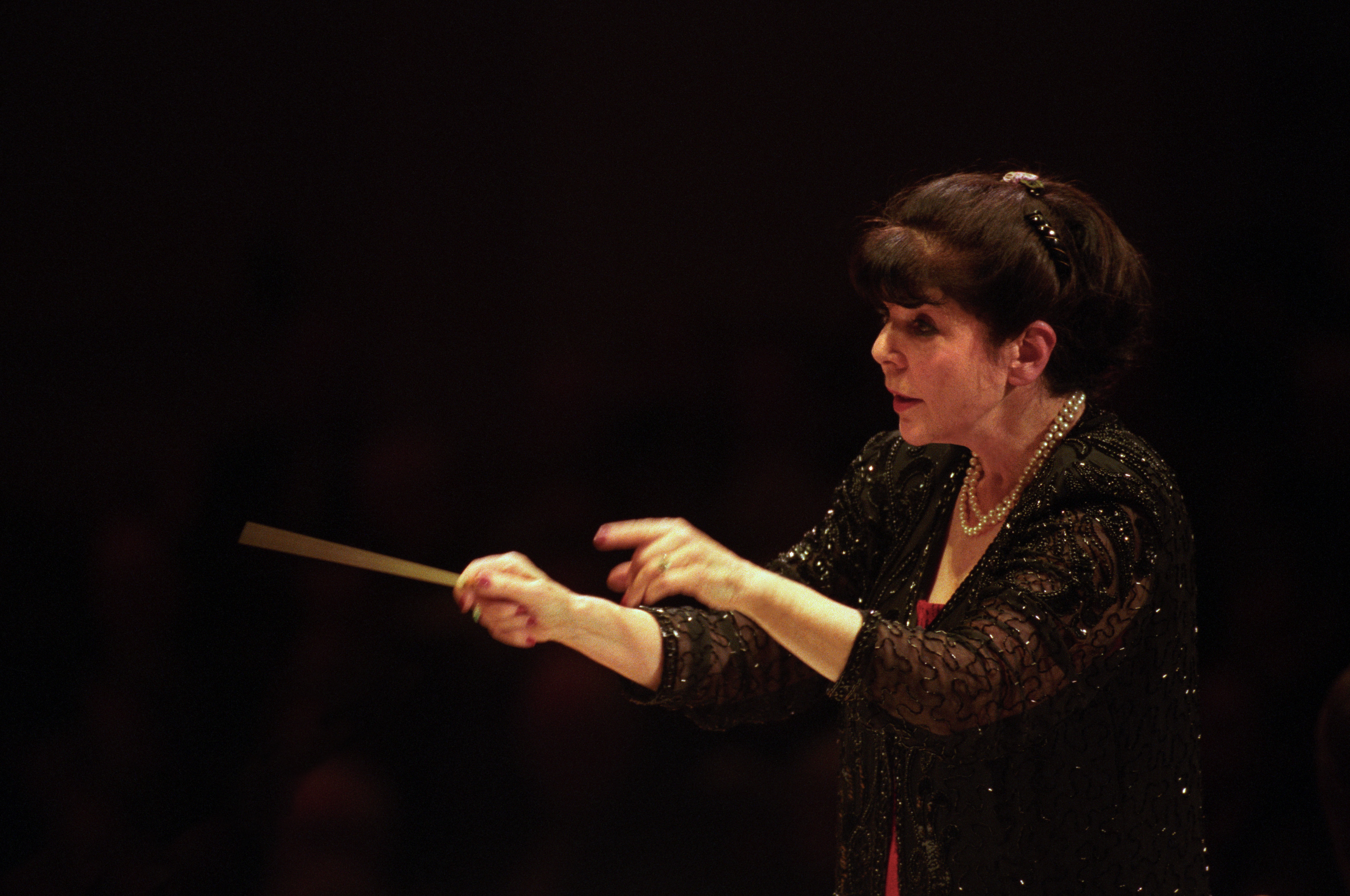
On March 2, Eve Queler ascended the podium one last time as Music Director of the Opera Orchestra of New York to conduct a concert performance of the same work that inaugurated the company back in 1972: Meyerbeer’s L’Africaine. Following the thunderous applause that greeted her entrance, Ms. Queler raised her baton and proceeded to elegantly unwrap Meyerbeer’s exotic score to the near sold out Avery Fischer Hall for the next three hours. And what a score it is! Critics of Meyerbeer have dismissed his writing as calculated and cheaply affected, but this is bunk! Just the construction of Act One alone shows that Meyerbeer was a master musical dramaturgist. That he managed to entertain in the meantime is nothing but sheer bonus.
Paradise staged: Grand Opera and Meyerbeer’s L’Africaine
Grand Opera, what is it? To the common man, and certainly to many an opera company’s PR department, all operas ranging from Mozart’s to Giordano’s are grand operas. But Grand Opera, or rather French Grand Opera, is commonly defined by operas composed primarily for the French stage between the years 1828 to roughly 1868. Many ingredients contributed to the development of the new genre. The fall of the Napoleonic Empire in 1816 brought the restoration of the Bourbon monarchy, and with it, the previously state ran L’Opera was privatized under the auspices of Louis Desire Veron in 1831. By then, the first run of what we now recognize as the first “opera in the grand style” (Auber’s La Muette de Portici) had already taken place.
The Minnesota Opera presents Donizetti’s Maria Stuarda
Minnesota Opera’s production of Donizetti’s Maria Stuarda opened last Saturday, January 29 at the Ordway theatre to an enthusiastic, near sold out house. Patrons who attended last year’s first installment of the so-called “Tudor Trilogy,” Donizetti’s Roberto Devereux, were instantly brought back to director Kevin Newbury’s vision of the English court.
When Queens Attack! A preview of Minnesota Opera presentation of Donizetti’s Maria Stuarda.
As the plane skids on patches of ice along the Minneapolis-St. Paul International Airport runway, my eye turns to the window to witness the exotic landscape of white snow that awaits me once outside the plane. Yet, a Southern boy must suffer to get his fix of Donizetti, and as the weight of carry-on bags crush my left shoulder during my search for the bus terminal, my mind races towards the events that await me as Minnesota Opera premieres Donizetti’s Maria Stuarda this Saturday.